

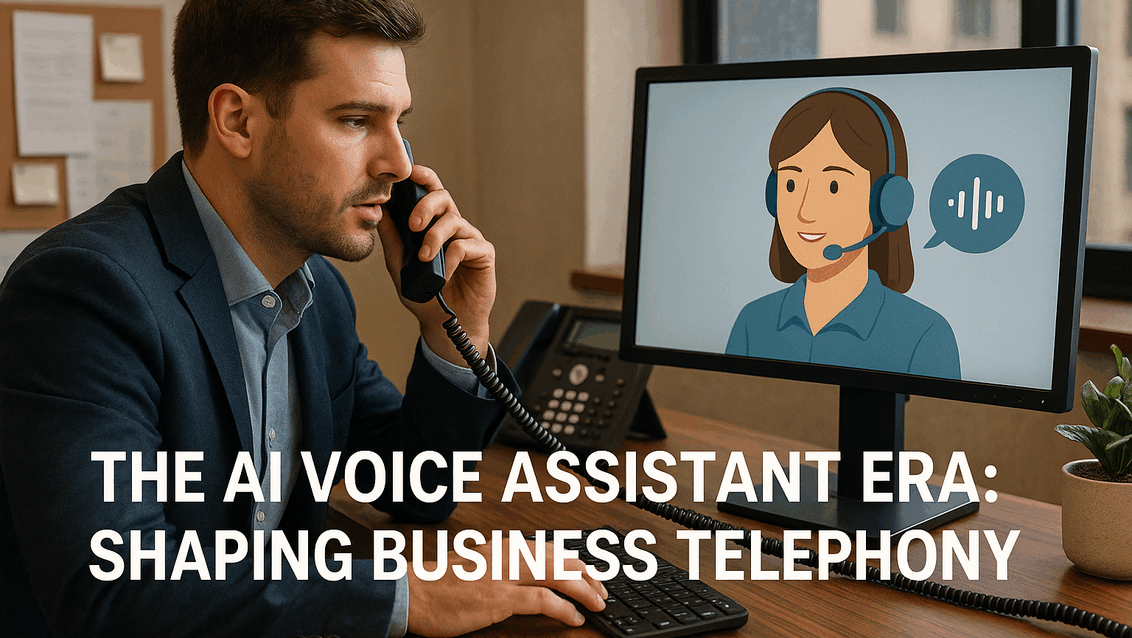
Picture this: a customer calls your business, and instead of waiting in a queue or struggling to communicate, their requests are handled instantly, accurately, and conversationally by a lifelike AI sales call bot. This isn’t a distant future—it’s transforming sales, support, and every facet of customer interaction for organisations of all sizes right now. The fusion of AI voice assistants with business telephony (covering everything from PSTN and SIP trunks to VoIP contact centres) is rewriting the script for how businesses handle inbound and outbound calls, automate workflows, and deliver ROI across industries.
From small retail shops booking appointments after hours to large-scale sales teams automating outreach, AI sales call bots and AI voice assistants are fast becoming the heartbeat of modern business communications. Let’s explore the landscape, architectures, and deployment options powering this new era, and spotlight how enterprises leverage these solutions to amplify growth, streamline operations, and delight customers in ways previously unimaginable.
The AI Sales Call Bot Era: Shaping Modern Business Telephony
Modern AI sales call bots are not just novelty bots; they deliver human-like conversations that can route calls, qualify leads, book appointments, check order statuses, and even process secure voice payments—all while maintaining brand consistency and compliance. This transformation is powered by advanced speech synthesis (TTS), automatic speech recognition (ASR), and large language models (LLMs) interconnected with telephony infrastructure.
Business telephony historically relied on legacy IVR menus and basic routing logic, which often frustrated callers and limited automation. Today’s AI sales call bots leverage intent recognition, contextual memory, and multilingual support to create fluid, dynamic interactions. Whether integrating with cloud or on-premises PBXs, or operating as SaaS overlays for VoIP and SIP endpoints, these solutions scale from SMB hotlines to enterprise contact centre automation.
The impact is profound: enterprises — including those using platforms like Bland AI — are automating thousands, even millions, of simultaneous calls, customising voices for distinct brand identities, and maintaining strict compliance in healthcare, finance, and international environments. It’s no surprise that contact centre architects and SMB innovators alike cite AI sales call bots as drivers of significant ROI, with faster response times, higher customer satisfaction, and major labour efficiency gains.
Below, we break down core use cases, real-world examples, and deployment models that make these solutions work.
Key AI Sales Call Bot Use Cases: Real-World Business Impact
AI sales call bots now anchor workflows previously handled by human operators. Their versatility and cost-effectiveness drive adoption in diverse industries. Here are some of the most impactful use cases:
Automated Appointment Booking & After-Hours Answering with AI Sales Call Bots
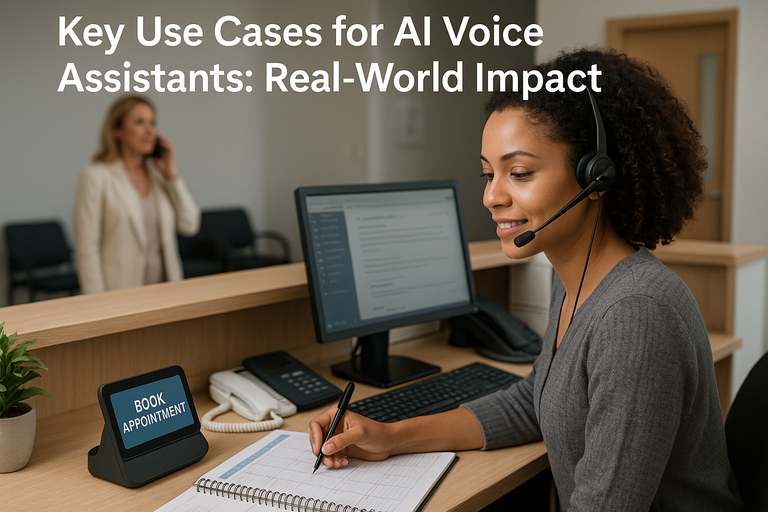
For clinics, salons, or repair shops, missed calls mean missed revenue. AI sales call bots seamlessly handle scheduling, rescheduling, and send confirmation by SMS or email — operating 24/7 to reduce lost opportunities drastically. After-hours, these bots capture leads or redirect urgent queries to on-call personnel without human involvement.
Order Status Updates, Tier-1 Support, & Secure Voice Payments
E-commerce, logistics, and fintech industries utilise AI sales call bots to manage first-level customer inquiries — checking order status, troubleshooting common issues, or processing voice-authenticated payments securely. Leveraging PCI-compliant workflows and robotic process automation (RPA) integrations, these systems offer frictionless and private customer support experiences.
Lead Qualification, Call Routing & Multilingual Customer Support
AI sales call bots qualify inbound sales leads, gather essential contextual information, and route calls based on skillset, priority, or account tier. With multilingual ASR and TTS, global businesses provide inclusive, localised services in customers’ preferred languages, boosting conversion rates and reducing churn.
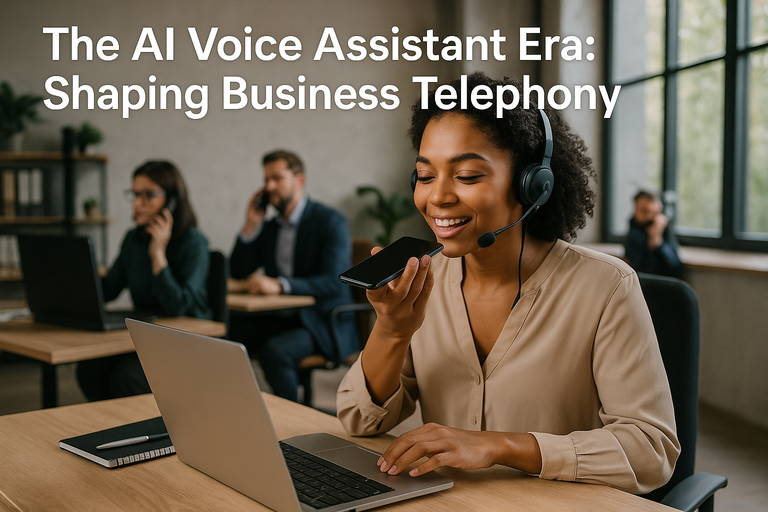
Architectures & Deployment Models for AI Sales Call Bot Integration
How are powerful AI sales call bots integrated into existing business telephony setups? Here are primary architectures explained:
Cloud-Native SaaS AI Sales Call Bot Platforms
Most SMBs and enterprises prefer cloud-native AI voice platforms that interface with VoIP/PSTN via APIs or SIP trunks. These SaaS solutions offer easy onboarding, robust analytics, and access to the latest LLM advancements without complex infrastructure management.
On-Premises & Hybrid Deployments for Compliance
Regulated industries demand full data sovereignty. Providers like Bland AI facilitate deployment on dedicated servers with GPU acceleration, customer-specific model fine-tuning, and stringent data encryption. Hybrid models combine cloud scalability with on-premises routing for sensitive flows, ensuring compliance.
API-Led & Omnichannel Integrations for Unified Communication
Flexibility is vital. Leading AI sales call bot platforms provide developer-friendly APIs, webhooks, and native integrations with CRMs, ERPs, and contact centre suites. This enables unified communication across calls, SMS, and chat — delivering a comprehensive omnichannel customer experience.
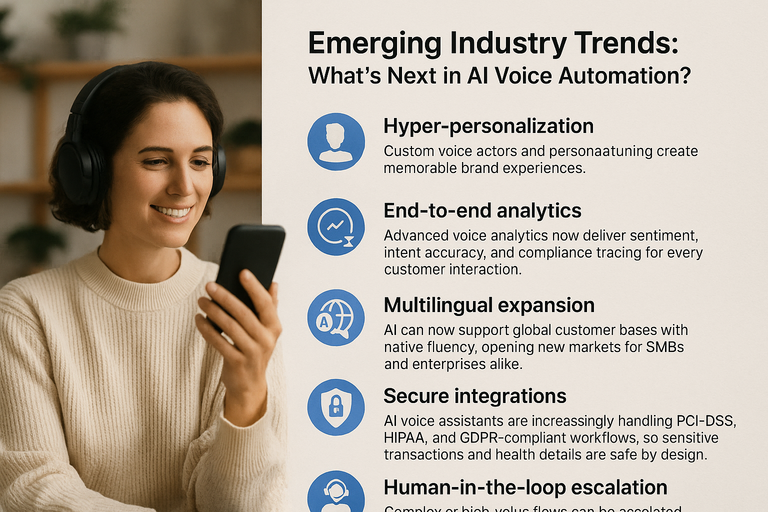
Emerging Industry Trends in AI Sales Call Bot Technology
The pace of AI voice automation innovation is staggering. Key trends include:
- Hyper-personalisation: Custom voice actors and persona tuning create memorable brand experiences.
- End-to-end analytics: Voice analytics deliver sentiment analysis, intent accuracy, and compliance recording for customer interactions.
- Multilingual support expansion: AI can support global audiences with native-level fluency, unlocking new markets.
- Secure workflow integrations: AI sales call bots are increasingly handling PCI-DSS, HIPAA, and GDPR-compliant processes, securing sensitive transactions and information.
- Human-in-the-loop escalation: Complex or high-value interactions escalate to live agents automatically for continuity and quality assurance.

Compliance & Privacy in AI Sales Call Bot Deployments
In Australia, privacy regulation is governed by the Australian Privacy Principles (APPs), while international compliance requirements include GDPR (Europe) and CCPA (California). AI sales call bots are designed to align with these laws by:
- Implementing strict data anonymisation and pseudonymisation techniques.
- Ensuring data retention policies comply with legal standards, limiting storage duration based on necessity.
- Seeking explicit user consent for voice recording and data processing.
- Employing encryption both in transit and at rest to secure sensitive voice data.
- Providing audit logs and compliance tracing for regulated industries such as healthcare and finance.
Platforms like Bland AI offer region-specific data residency options and compliance certifications to help businesses securely deploy AI sales call bots.
Case Studies: AI Sales Call Bots Delivering Measurable ROI
Financial Services: Scaling Secure Voice Payments with AI Sales Call Bots
A multinational bank employs AI sales call bots to authenticate callers and process credit card transactions securely over the phone. This includes voice biometric authentication, TTS payment verification, and encrypted transaction logs to maintain PCI compliance. The solution achieves up to 40% labour cost savings and reduces PCI scope for agents significantly.
Healthcare Providers: 24/7 Patient Support & Automated Appointment Scheduling
Healthcare organisations use AI sales call bots to manage after-hours patient calls, provide appointment reminders, and manage prescription refills. Multi-region deployment and language support ensure sensitive patient data remains within geographic boundaries, enhancing both uptime and patient satisfaction by 35%.
Retail & e-Commerce: Automated Order Tracking & Real-Time Upselling
Online retailers integrate AI sales call bots to respond to order status queries and recommend related products dynamically by syncing with real-time inventory and ERP systems. This results in a 20% increase in upsell conversions and improves average call handling times by 50%.
Sales Teams: High-Volume Lead Dialing & Qualification Automation
B2B sales organisations implement AI sales call bots for outbound cold calling and inbound lead qualification. These bots schedule demonstrations, answer FAQs, and update CRM call notes automatically, accelerating sales cycles by 25% while retaining consistent lead engagement.
Specs That Matter: Key Metrics for AI Sales Call Bots
- Simultaneous call handling capacity: up to 1 million concurrent calls
- Average intent recognition accuracy: 90%+
- Voice latency (response time): under 200 ms
- Multilingual support: 30+ languages/dialects
- Uptime guarantee: 99.9% SLA
- Data encryption: AES-256 at rest and TLS 1.3 in transit
- Compliance certifications: PCI-DSS, HIPAA, GDPR, APPs
Measurement & ROI: Tracking Benefits of AI Sales Call Bots
- Faster response times: reductions of up to 70% compared to manual call handling.
- Customer satisfaction improvements: Net Promoter Score (NPS) uplift of 15+ points.
- Labour cost savings: up to 40% reduction in call centre staffing.
- Increased lead conversion rates: uplift by over 25% due to immediate engagement.
- Reduction in average handle time (AHT): improved by 30-50% across contact centres.
Implementation Checklist for Deploying AI Sales Call Bots
- Assess call volume and use cases: Define key objectives including after-hours support, sales outreach, or multilingual needs.
- Choose compliant platforms: Ensure selection supports data sovereignty, region-specific deployments, and encryption.
- Plan integrations: CRM, ERP, and ticketing system connections to unify customer data streams.
- Train and customise: Invest in custom voice models, intent tuning, and persona development for brand consistency.
- Monitor analytics: Use call transcripts, sentiment metrics, and intent accuracy reports to refine bot performance.
- Prepare escalation paths: Human-in-the-loop escalation for complex interactions to maintain quality.
FAQs about AI Sales Call Bots
Q: What is an AI sales call bot?
An AI sales call bot is an automated voice assistant powered by AI that can engage with customers over the phone to qualify leads, book appointments, provide support, and process payments without human intervention.
Q: How do AI sales call bots improve sales processes?
They automate lead qualification, schedule follow-ups, and handle high call volumes efficiently, freeing up human agents to focus on complex conversations and closing deals.
Q: Are AI sales call bots compliant with Australian privacy laws?
Yes, reputable providers ensure compliance with Australian Privacy Principles (APPs), GDPR, and other regulations by implementing data anonymisation, encryption, and consent management.
Q: Can AI sales call bots support multiple languages?
Yes, most platforms offer multilingual support with automatic speech recognition and speech synthesis in 30+ languages and dialects, enabling global customer engagement.
Q: What are the integration capabilities of AI sales call bots?
They typically offer APIs and native integrations with popular CRMs, ERPs, and contact centre suites, allowing seamless workflow automation across communication channels.
Conclusion: Embrace AI Sales Call Bots to Future-Proof Your Business Communications
The rise of AI sales call bots marks a transformative shift in how businesses engage customers and automate communications. By adopting these advanced tools today, organisations across healthcare, retail, finance, and corporate sectors in Australia can achieve substantial efficiency, compliance, and revenue gains.
At signinspire.com.au, we recommend evaluating your current telephony workflows and exploring AI sales call bot solutions tailored to your unique needs. Don’t let your competitors answer the call first—embrace the AI revolution in business telephony and deliver exceptional customer experiences with cutting-edge technology.