
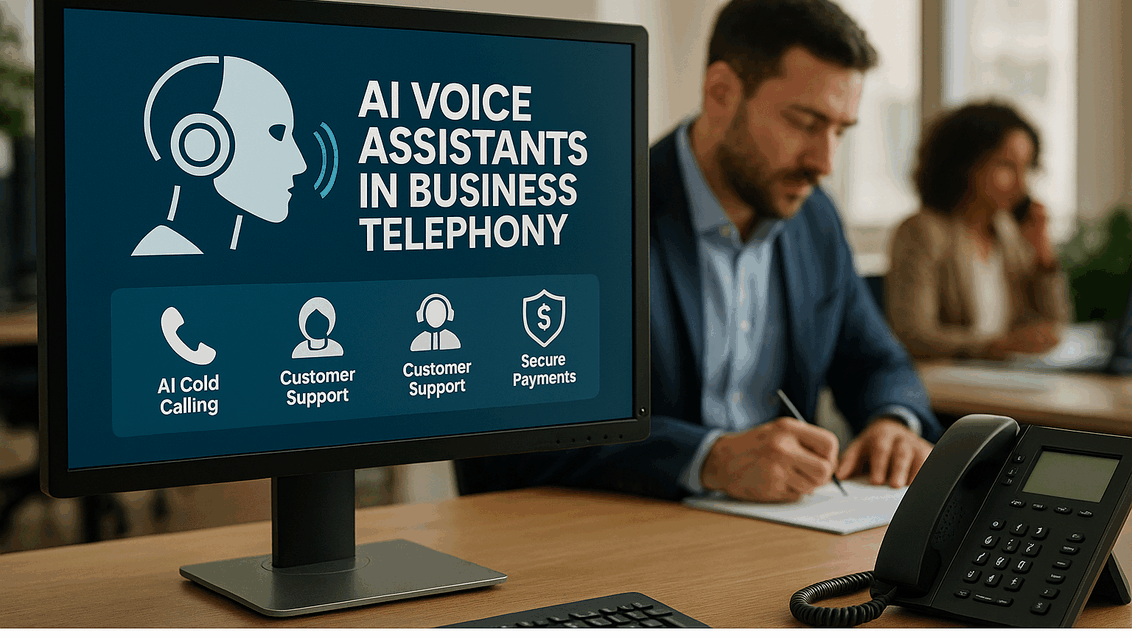
The rise of AI voice assistants in business telephony is revolutionizing how organisations manage phone communications. From automating AI cold calling to streamlining customer service and ensuring regulatory compliance, today’s AI-powered voice agents provide intelligent, adaptive, and scalable telephony solutions for large contact centres and small-to-midsize businesses (SMBs) alike. This comprehensive guide explores core concepts, real-world applications, architectures, and emerging trends, demonstrating how AI voice assistants are driving measurable ROI across inbound and outbound telephony workflows.
Understanding AI Voice Assistants in Business Telephony and AI Cold Calling
AI voice assistants have advanced significantly, evolving from traditional rule-based IVRs to sophisticated conversational agents powered by large language models (LLMs), automatic speech recognition (ASR), and text-to-speech (TTS) systems. These assistants can handle calls over PSTN, SIP, or VoIP, integrating seamlessly with contact centre platforms and PBX systems.
For businesses with high call volumes or requiring 24/7 availability, AI voice assistants automate repetitive tasks, enhance customer engagement, and provide structured data for analytics and compliance. Today, they are accessible to SMBs for tasks such as tier-1 customer support, appointment scheduling, and order processing, offering cost-effective solutions that previously were viable only for enterprises.
Key AI Cold Calling Use Cases and AI Voice Assistant Applications in Telephony

Businesses deploy AI voice assistants extensively across inbound and outbound calling. The most impactful AI cold calling and voice assistant use cases include:
Automated Appointment Booking and Scheduling
AI voice assistants engage callers, check calendar availability, book, confirm, or reschedule appointments. This functionality is critical in healthcare, retail, and personal services where efficient scheduling boosts revenue and customer satisfaction.
Tier-1 Customer Support and FAQs Handling
AI handles routine queries like password resets and opening hours, relieving human agents for complex cases. Advanced platforms integrate speech recognition with knowledge bases for contextual support, improving responsiveness and reducing wait times.
Order Status Updates and Processing
AI voice assistants provide 24/7 order tracking by accessing backend systems, updating customers with timely information, and processing orders in multiple languages with natural, conversational speech synthesis.
After-Hours Answering and Emergency Handling
Ensure continual business availability with AI solutions that gather information, provide answers after-hours, and escalate emergent issues based on configurable triggers.
Lead Qualification and Intelligent Call Routing
For sales teams, AI voice assistants prequalify leads, determine caller intent, and route valuable prospects to human agents, optimising sales pipelines and enhancing conversion rates.
Secure Voice Payments and Customer Account Management
With PCI DSS compliance, AI voice solutions support secure payments using DTMF inputs, voice-guided workflows, and speaker verification to protect sensitive financial information.
Multilingual Support and Accessibility Features
Many modern AI voice assistants support dozens of languages, auto-detect caller language preferences, and enhance accessibility, helping businesses provide inclusive, global customer experiences.
AI Cold Calling: Transforming Outbound Voice Agents at Scale
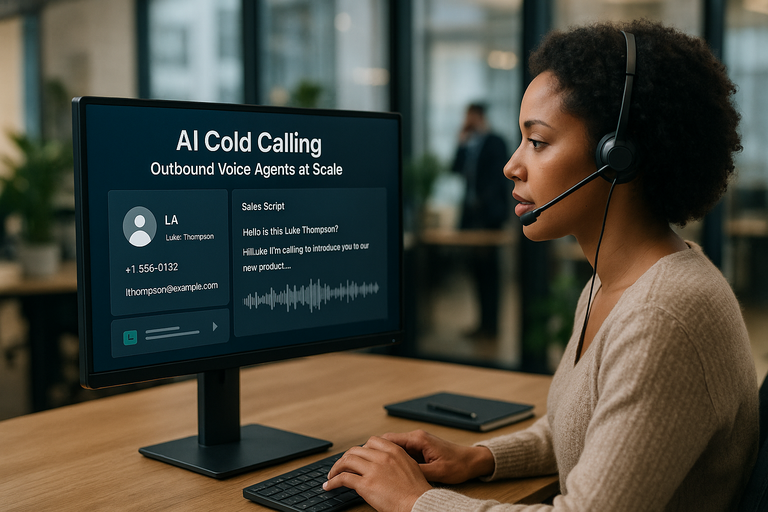
AI cold calling is reshaping outbound sales operations by automating initial customer contact, lead qualification, and appointment setting. This reduces the workload for sales teams and improves efficiency.
Leading platforms such as Lindy.ai, Bland AI, and Dialpad Sell use AI agents that follow dynamic sales scripts, personalise conversations using CRM data, respond to objections, update lead statuses, and operate continuously across time zones.
Why Automate Outbound Calls with AI Cold Calling?- Improves sales productivity by letting AI manage repetitive cold calling tasks.
- Enables human agents to focus on qualified leads, increasing close rates.
- Incorporates real-time compliance with TCPA, DNC lists, and consent verification to reduce legal risk.
- Operates 24/7, expanding call coverage without extra staffing.
Measurable ROI from AI Cold Calling
Organisations report:
- 30-50% reduction in sales cycle duration.
- Significant increase in qualified lead conversion.
- Enhanced data capture and call analytics feeding continuous improvement.
Industry Trends and Real-World AI Cold Calling Success Stories
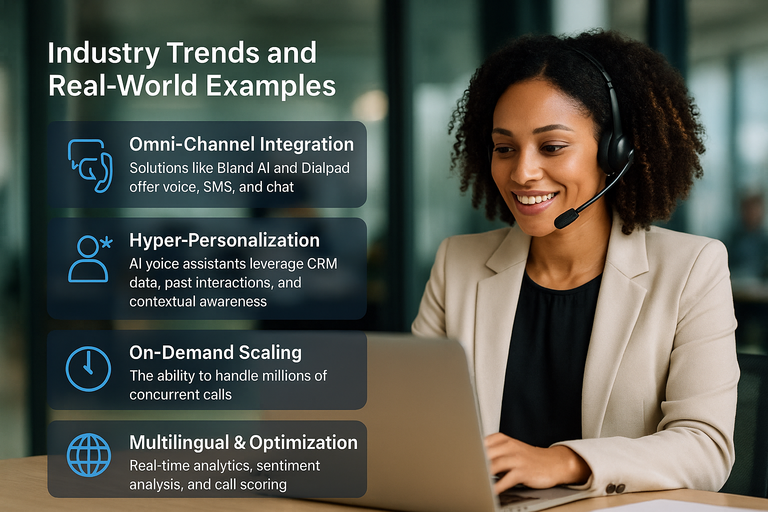
Key trends fueling the growth of AI voice assistants and AI cold calling include:
- Omnichannel Integration: Unified platforms deliver voice, SMS, and chat, enabling smooth channel transitions for customers and agents (explore related AI solutions).
- Hyper-Personalisation: Leveraging CRM and contextual data to tailor conversations bolsters engagement.
- On-Demand Scalability: Platforms can handle millions of concurrent calls to meet business surges and holiday demands without extra hires.
- Data-Driven Optimisation: Real-time analytics, sentiment analysis, and call scoring help refine scripts and ensure compliance.
- Multilingual and Regional Readiness: Support for numerous languages and data residency options assist global compliance and customer support.
Case Study: DIY AI Cold Calling with Twilio, OpenAI, and Google Sheets
A notable implementation showcased in the OpenAI Developer Community integrates Twilio for telephony, OpenAI LLMs for conversational intelligence, and Google Sheets as a lightweight CRM. This system automates outbound calls, books appointments directly to Google Calendar, and exemplifies the flexibility of API-driven AI voice assistants.
Enterprise Solutions: Bland AI and Lindy for Custom and Ready-Made Voice AI
Bland AI offers bespoke on-premises voice AI platforms with custom models and strong compliance features, ideal for finance, healthcare, and logistics. Lindy and Dialpad provide out-of-the-box AI sales agents, simplifying deployment through drag-and-drop interfaces and pre-built workflows.
Deployment Architectures for AI Voice Assistants and AI Cold Calling Platforms
Deployment options balance scalability, compliance, and control:
Cloud-Based AI Voice Solutions
Most providers deliver SaaS models encompassing telephony integration, AI processing (TTS, ASR, LLMs), and CRM connectivity. Benefits include fast setup, high scalability, and minimal internal IT requirements.
On-Premises and Private Infrastructure Deployment
Compliance-driven organisations opt for dedicated hardware and localized AI to maintain data sovereignty, meet privacy regulations, and implement custom controls.
Hybrid Deployment Models
Combining cloud-based core AI with on-premises modules such as secure payment processing balances agility with stringent compliance needs.
Ensuring Compliance, Privacy, and Security with AI Cold Calling and Voice Assistants
AI telephony systems must adhere to:
- Australian Privacy Principles (APPs): Maintaining data anonymity, securing consent, and providing transparent use disclosures.
- EU GDPR: Managing data retention, rights to erasure, and lawful processing of personal data.
- US CCPA: Protecting consumer privacy and opting out of sale of personal information.
Leading platforms integrate features like encrypted storage, consent management, real-time opt-out handling, audit trails, and on-device inference to ensure privacy and regulatory compliance.
Specs That Matter for AI Voice Assistants and AI Cold Calling Technologies
- Call Handling Capacity: Platforms can support from hundreds to millions of concurrent calls depending on infrastructure.
- Latency: Real-time interactions aim for sub-250ms response latency to maintain natural conversations.
- Speech Recognition Accuracy: Modern ASR systems achieve 90-95% accuracy even in noisy environments.
- Language Support: Dozens of languages and regional accents supported, with continuous model improvements.
- Compliance Features: Built-in DNC filtering, PCI DSS-compliant payment support, and consent logging ensure legal adherence.
Measurement & ROI: Tracking AI Cold Calling Performance
- Key KPIs: Contact rate, conversion rate, call-to-meeting ratio, average call duration, and customer satisfaction.
- A/B Testing: Continuous script optimisation using call analytics and sentiment analysis improves agent effectiveness.
- POS Tie-Ins: Integration with sales and CRM systems provides comprehensive ROI visibility.
Implementation Checklist for AI Cold Calling and AI Voice Assistant Rollout
- Ensure robust telephony infrastructure (SIP trunking, PSTN access).
- Integrate AI platforms with existing CRM and customer databases.
- Develop clear, brand-aligned conversation scripts.
- Implement compliance checks for consent, DNC lists, and call recording laws.
- Train teams on escalation protocols and fallback procedures.
- Set up monitoring dashboards for call analytics and quality assurance.
Emerging Trends in AI Cold Calling and Voice Assistants
- Generative AI Enhancements: Using LLM-driven autonomous agents to handle complex multi-step workflows.
- On-Device AI Processing: Privacy-focused deployments that limit cloud data exposure.
- Agentic Workflow Automation: Coordinating multi-agent systems for seamless customer journeys.
- Advanced Voice Biometrics: Speaker verification improving payment security and user authentication.
FAQs on AI Cold Calling and AI Voice Assistants in Business Telephony
Q: What is AI cold calling, and how does it differ from traditional telemarketing?
AI cold calling uses AI-powered voice assistants to automate initial outbound sales calls, qualifying leads and scheduling appointments. Unlike conventional telemarketing, it offers natural conversations, real-time adaptability, and compliance with legal regulations.
Q: How can AI voice assistants improve customer service and sales efficiency?
They automate routine tasks, provide 24/7 coverage, handle multiple languages, and free human agents to focus on complex interactions, resulting in faster response times and increased sales conversions.
Q: What compliance regulations impact AI cold calling in Australia?
AI cold calling must comply with the Australian TCPA, Do Not Call (DNC) registers, and the Australian Privacy Principles (APPs), ensuring consent management, opt-outs, and data security.
Q: Are AI cold calling systems secure for handling payments?
Yes, with PCI DSS-compliant voice payment workflows, secure DTMF capture, and speaker verification, AI voice assistants protect sensitive payment information during calls.
Q: What should businesses consider before deploying AI voice assistants for cold calling?
They should assess integration capabilities, compliance requirements, script customisation, ongoing monitoring, and transparent customer communication including AI disclosure and opt-out options.
Conclusion: Embrace AI Cold Calling to Elevate Business Telephony in Australia
AI Voice Assistants, particularly in AI cold calling, are transforming the telephony landscape for Australian businesses across retail, corporate, and healthcare sectors. By automating outbound calls, improving customer interaction quality, and ensuring robust compliance, these technologies deliver measurable efficiency gains and enhanced customer experiences. Early adopters enjoy accelerated sales cycles, reduced operational costs, and continuous insights driving growth. To stay competitive, Australian enterprises should integrate AI voice assistants as vital digital teammates, fostering smarter, responsive, and compliant communication strategies.