

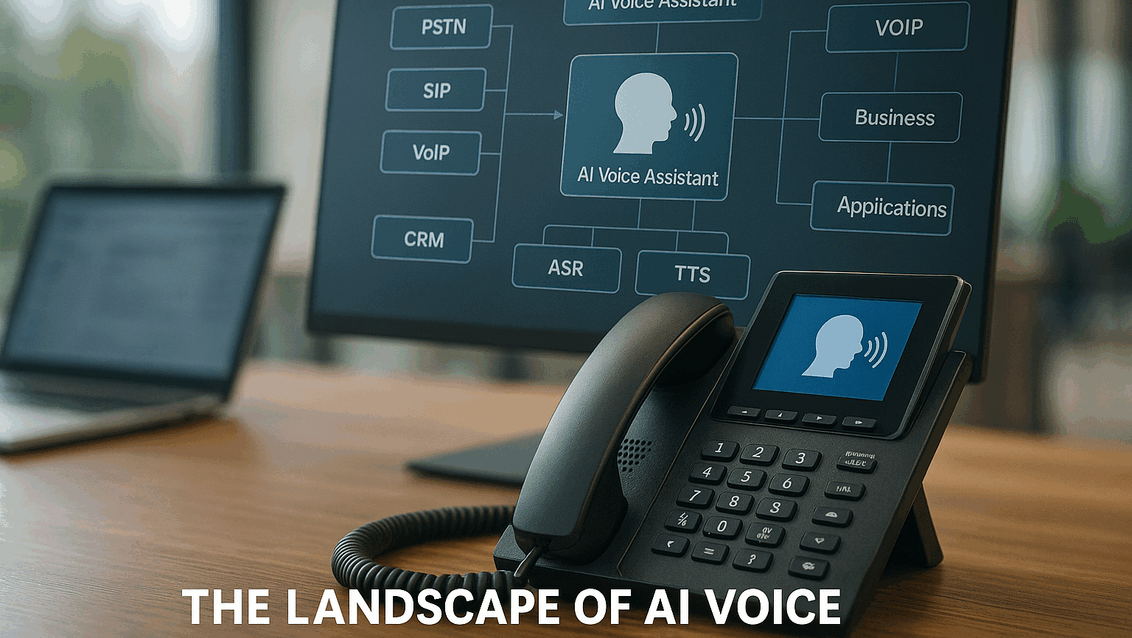
The rise of the AI call centre is revolutionising business telephony. From small and medium-sized businesses (SMBs) to expansive enterprise contact centres, AI-driven voice assistants are automating inbound and outbound calls to improve operational efficiency and customer satisfaction. This article unpacks how AI voice assistants integrate with telephony systems, offering concrete use cases, technological architectures, industry trends, and measuring return on investment (ROI) for businesses across Australia.
Transforming Business Telephony with AI Call Centre Voice Assistants
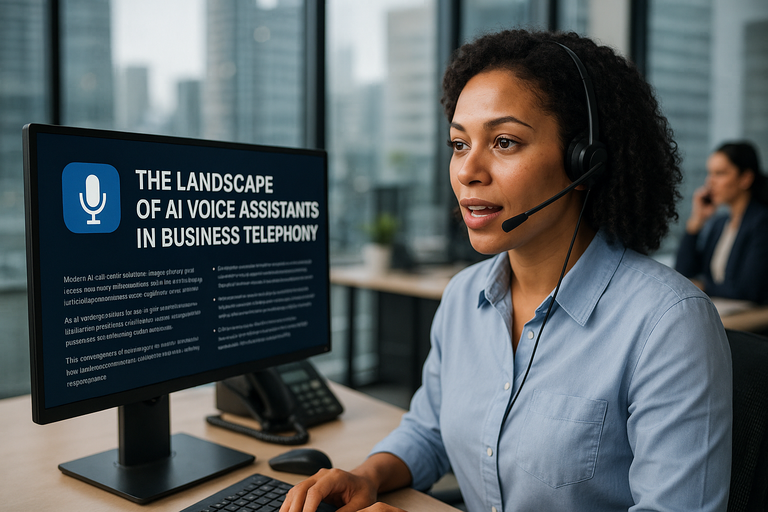
Business telephony has evolved from simple point-to-point voice communications to complex networks incorporating Public Switched Telephone Network (PSTN), Session Initiation Protocol (SIP), and Voice over Internet Protocol (VoIP) technologies. Central to this evolution is the AI voice assistant, which leverages Automatic Speech Recognition (ASR), Text-to-Speech (TTS), and Large Language Models (LLMs) to understand natural language and handle calls autonomously.
Modern AI call centre platforms seamlessly integrate with legacy telephony infrastructure, Customer Relationship Management (CRM) systems, and other business apps, enabling unified workflows across voice and digital channels. These integrations facilitate real-time data exchange and intelligent decision-making, enhancing both efficiency and customer experience.
Cloud-based and hybrid deployment models provide scalable options, including privacy-preserving on-device inference mechanisms for compliance in industries like healthcare and finance. Enhanced machine learning algorithms improve intent detection accuracy over time, facilitating natural conversations and reducing the need for human intervention.
This convergence of advanced telephony and AI technologies is not only streamlining operations but also reshaping customer expectations around responsiveness and personalisation.
Key Use Cases of AI Voice Assistants in AI Call Centre Operations
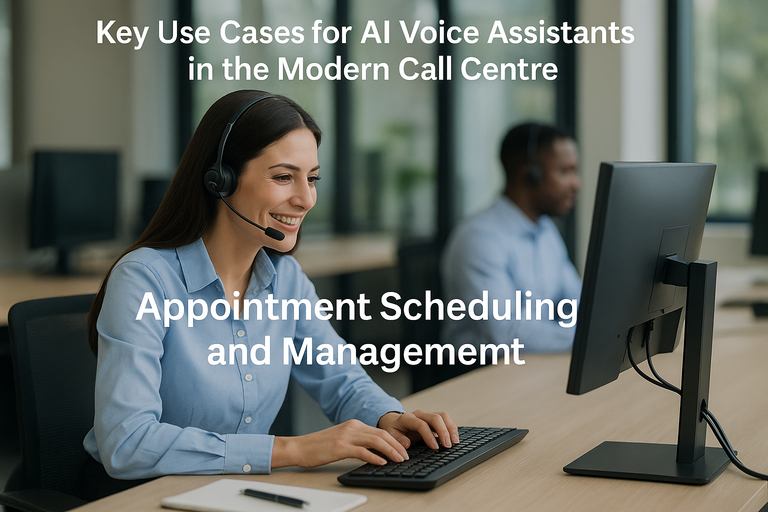
Appointment Scheduling and Management
AI voice assistants automate appointment bookings by navigating callers through availability checks, confirmations, rescheduling, and cancellations without human agent involvement. This reduces no-show rates and frees staff to focus on complex tasks.
- Integrates with CRM and practice management systems for real-time updates.
- Supports multilingual callers and after-hours bookings.
- Provides automated reminders, improving customer adherence by up to 30%.
Tier-1 Support and Self-Service Automation
AI-powered Tier-1 support handles routine inquiries such as password resets and FAQs efficiently. This decreases call waiting times by up to 50% and increases first-call resolution (FCR) rates.
- Automated call summarisation and transcript generation enhance handoffs to human agents.
- Dynamic call scripting ensures compliance with industry regulations.
- Voice biometrics reinforce security and authentication.
Order Status and Real-Time Call Routing
AI voice assistants provide up-to-date order and delivery information by connecting with ERP and CRM platforms. Advanced conversational AI enables accurate, intent-based call routing, reducing misdirected calls by up to 35%.
- Offers upsell opportunities during calls through context-aware prompts.
- Supports omnichannel engagement continuity across voice, chat, and email.
After-Hours Answering and Multilingual Support
Operating 24/7, AI voice assistants ensure customers receive assistance in their preferred language, enhancing global reach.
- Real-time translation capabilities and region-specific voice models.
- Handles crisis and holiday workload spikes effectively.
- Improves customer satisfaction scores (CSAT) and Net Promoter Scores (NPS).
Voice Payments and Secure Transactions
AI-enabled voice payments leverage PCI-compliant speech workflows and encrypted data handling to facilitate secure, seamless transactions.
- Role-based access and dynamic redaction for privacy compliance.
- Integration of voice biometrics and multi-factor authentication combats fraud.
- Supports compliance with GDPR, CCPA, and Australian Privacy Principles (APPs).
Technical Architectures and Deployment Models for AI Call Centre Platforms

Speech Engine Integration and Connectivity
AI voice assistants connect with SIP trunks, PSTN gateways, and VoIP services, enabling seamless call initiation and termination.
- Deep integration with ASR and TTS engines ensures real-time, accurate voice interactions.
- End-to-end encryption and redundancy guarantee uptime above 99.9%.
- API-driven low-code integrations with CRM and ticketing systems streamline workflows.
- Edge computing supports low-latency, privacy-preserving inference.
- Microservices and containerised deployments allow agile updates and maintenance.
Data, Analytics, and Compliance Layers
Comprehensive analytics dashboards track key metrics such as call sentiment, intent accuracy, and escalation reasons in real time.
- Automated speech transcription and call summarisation reduce supervisory overhead.
- Data warehouses and BI tool integration enable advanced predictive analytics.
- Robust audit trails, role-based access, and data residency controls ensure compliance in regulated sectors.
- Privacy-by-design frameworks govern data collection, anonymisation, and retention.
Privacy, Compliance, and Data Security for AI Call Centres
Australian businesses leveraging AI call centre technologies must adhere to the Australian Privacy Principles (APPs), ensuring transparent data use and consent management.
International regulations including GDPR and CCPA require stringent anonymisation, retention policies, and user rights management. Leading AI platforms implement modular consent workflows, encrypted call recordings, and granular access controls to meet these standards.
These measures safeguard customer trust, protect sensitive personal and financial information, and facilitate legal compliance in sectors like healthcare, financial services, and government.
Calculating ROI for AI Voice Assistants in Call Centres

Key performance indicators (KPIs) to measure AI call centre ROI include:
- Average Handle Time reduction (typically 20-40%)
- First-Call Resolution rates increase (up to 80%)
- Cost per Contact decrease (up to 40%)
- Customer Satisfaction (CSAT) and Net Promoter Score (NPS) improvements (10-15% uplift)
Deployed AI voice assistants reduce headcount needs, minimise human errors, and upscale call handling capacity without compromising service quality. Post-implementation analytics provide insights to optimise scripts, staffing, and workflows continuously.
Industry Trends Accelerating AI Call Centre Technology Adoption
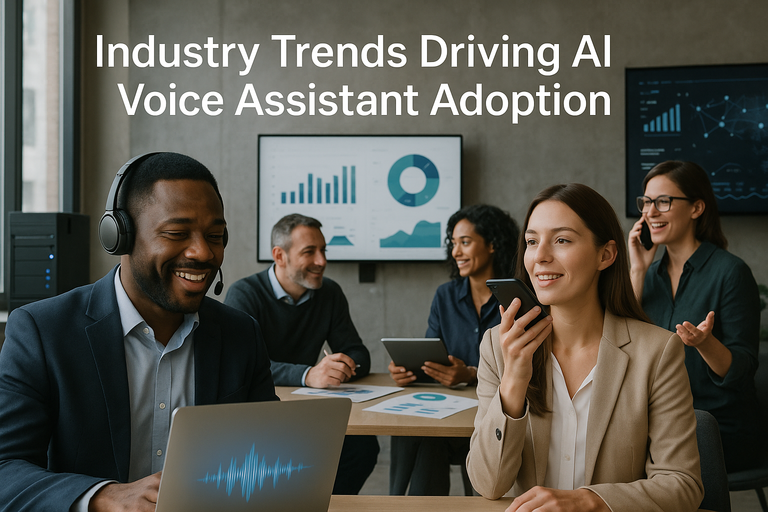
Recent trends driving uptake include:
- Rapid improvements in Large Language Models and few-shot learning for customised voice agents.
- Growing acceptance of AI-driven self-service and automation among consumers.
- Increased regulatory focus on compliance and data privacy.
- Remote work and distributed teams necessitating cloud-native communication platforms.
- Emergence of agentic workflows with real-time orchestration of multiple AI agents.
These trends position AI voice assistants as essential tools for delivering scalable, personalised, and secure customer experiences.
Specs That Matter for AI Call Centre Deployments
- System Uptime: 99.9% or above with failover capabilities.
- Speech Recognition Accuracy: 85-95% depending on language and acoustic environment.
- Latency: Sub-200 milliseconds for voice interactions to ensure natural conversations.
- Supported Languages: 50+ including regional Australian dialects.
- Integration Capabilities: Compatibility with major CRM, ERP, and ticketing platforms.
- Security Standards: PCI DSS, GDPR, CCPA, and APPs compliant.
Implementation Checklist for Successful AI Call Centre Projects
- Assessment of existing telephony infrastructure and network readiness.
- Selection of suitable AI platform with strong API and integration support.
- Data privacy and compliance strategy aligned with Australian and international laws.
- Staff training and change management plans to integrate AI assistants with agents.
- Continuous monitoring and model retraining to capture evolving customer intents.
- Fallback procedures and human override capabilities for exceptional cases.
Emerging Trends in AI Call Centre Technology for 2025 and Beyond
- Conversational AI moves towards proactive engagement, sentiment detection, and predictive service.
- Edge AI enables real-time inference closer to customers, improving responsiveness and privacy.
- Multimodal interactions combining voice, chat, and visual data for richer experiences.
- Agentic AI workflows coordinating multiple specialised assistants across channels.
- Ethical AI frameworks focusing on transparency, bias reduction, and responsible automation.
FAQs on AI Call Centre Solutions
Q: What is an AI call centre and how does it benefit businesses?
An AI call centre uses artificial intelligence, including voice assistants and natural language processing, to automate inbound and outbound customer interactions, improving efficiency, reducing costs, and enhancing customer satisfaction.
Q: How secure are AI voice assistants in handling sensitive customer data?
AI voice assistants incorporate encryption, role-based access, PCI DSS compliance, and voice biometrics to ensure secure handling of sensitive information and maintain privacy standards.
Q: Can AI call centres support Australian languages and dialects?
Yes, modern AI platforms support 50+ languages and regional dialects, including Australian English variations, to provide culturally relevant and effective interactions.
Q: How do AI call centres improve customer experience?
By offering 24/7 availability, reducing wait times, providing personalised service through context awareness, and supporting seamless handoffs between AI and human agents, AI call centres significantly elevate customer experiences.
Q: What should businesses consider before implementing AI call centre solutions?
Consider infrastructure readiness, compliance with privacy laws, integration capabilities, staff training, and continuous monitoring to ensure a smooth and successful AI deployment.
Investing in an AI call centre today enables Australian businesses to harness the power of conversational AI for scalable, personalised telephony. To stay competitive and deliver exceptional customer experiences, explore how AI voice assistant technology can transform your contact centre operations.